The Pursuit of Linguistic Rationale
Why Should Language Matter?
It is the invisible infrastructure of the thoughts we share, yet we rarely question how it was built.
If we look back to our earliest origins—to the survival-driven vocalizations of Homo sapiens, Neanderthals, and Denisovans—language did not begin as a grand design. It began as a reaction. Over tens of thousands of years, those early utterances layered upon each other, evolving into the sprawling, chaotic webs we speak today.
From a historical perspective, natural language is a messy hell. It is beautiful in its organic history, but it is fundamentally illogical. It has been manipulated by an ancient "babylon (babble-on)" design. It is weighed down by the ghosts of dead metaphors, contradictory grammar rules, and legacy spellings. We see the consequences of this convoluted mess every day. Whether in the translation barriers of global diplomacy, the deliberate ambiguities of legal contracts, or simply the daily friction of trying to make ourselves understood, we spend an immense amount of energy navigating the flaws of our tools rather than sharing the substance of our thoughts.
The Half-Solutions of the Modern Era
We are not the first to recognize this. Throughout the modern era, people have attempted to fix the chaos. Constructed languages like Esperanto and Lojban were noble efforts to build a better way to speak. Yet, they often function as half-solutions. They attempt to tidy up the mess, but they still rely on old etymologies, existing alphabets, and familiar phonetic crutches. They try to tie disparate historical threads together without correcting the underlying lack of internal logic.
What if we could rethink it from the ground up? What if we stopped relying exclusively on the slow, iterative crawl of human history, and partnered with artificial intelligence to engineer a language based deeply on rationale?
We had to ask ourselves: Why should a character be shaped this way? Why should it make this specific sound? How do we build meaning from the foundation up, combining symbols so that the architecture itself explains the concept?
This is the philosophy behind Vaerysha. It is not meant to be a "perfect" solution, but it is a pursuit of rationale.
The Architecture of Vaerysha
When analyzing functional human languages, the sweet spot for a working alphabet or syllabary usually ranges between 20 and 50 essential elements—think of the 26 letters of the English alphabet or the 46 characters of Japanese Hiragana. We needed a set within that range, but unlike historical scripts, every character had to logically reference the others.
We found our solution in the spiral.

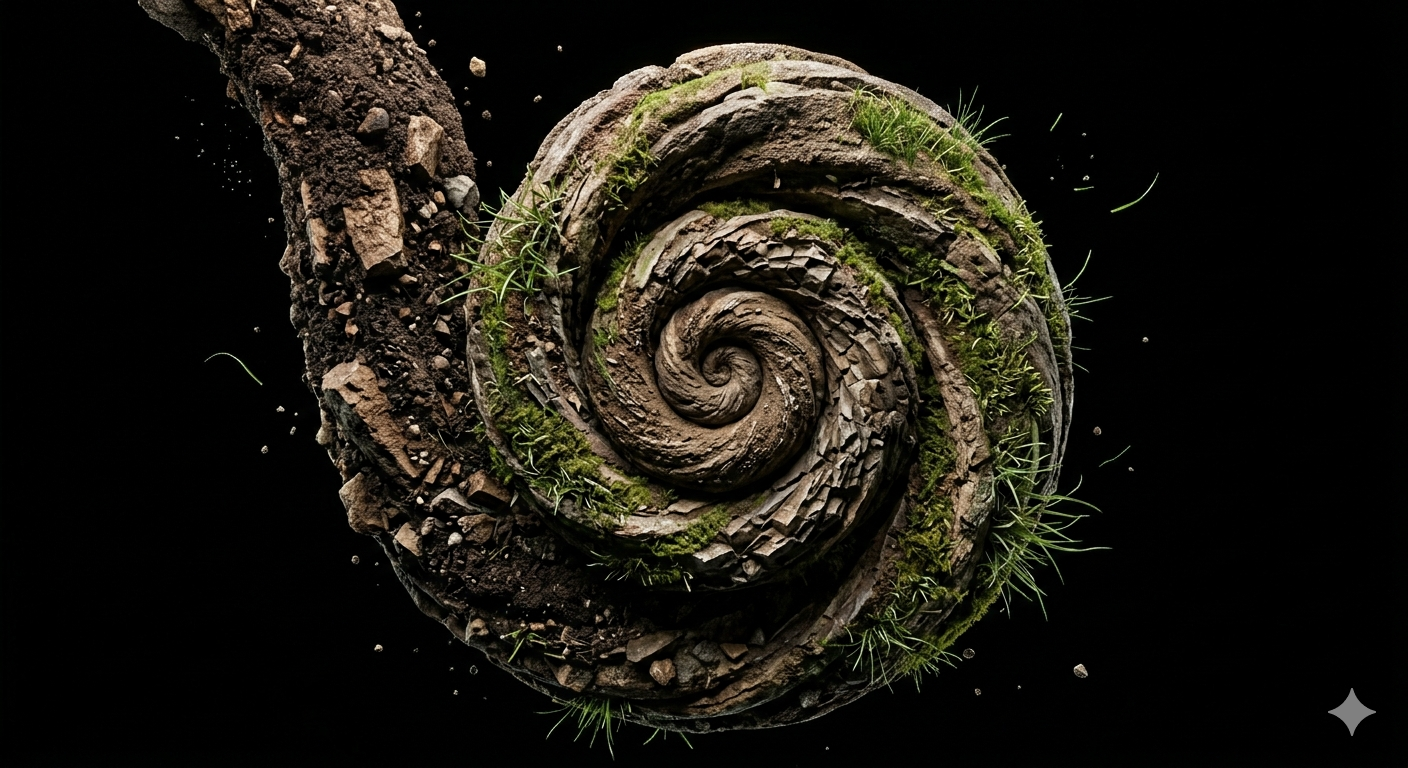
A spiral is inherently asymmetrical. If you take a simple spiral and apply basic flips and 90-degree rotations, you end up with exactly 8 distinct orientations. We then applied 4 simple path variations to that spiral—a jut, an open curve, a closed curve, and a wave.
Four variations, each in eight orientations. That gives us 32 base characters. They are quick to draw, distinct to the eye, and logically tied together.
The phonetics follow the same elegance. The human mouth is capable of producing a vast array of sounds, but we found common elements and organized 32 phonemes into 4 distinct categories: plosives, resonants, vowels, and voiceless fricatives. Within each of those four categories, there are 8 expressions that move methodically from the front of the mouth, like the labial "P", all the way to the back of the throat, like the velar "G" or "H".
The visual shape synchronizes with the sound. When writing, the progression flows intuitively: the stem anchors the character from top to bottom, left to right, and the deviations follow that same pattern.
Bridging Human and Machine
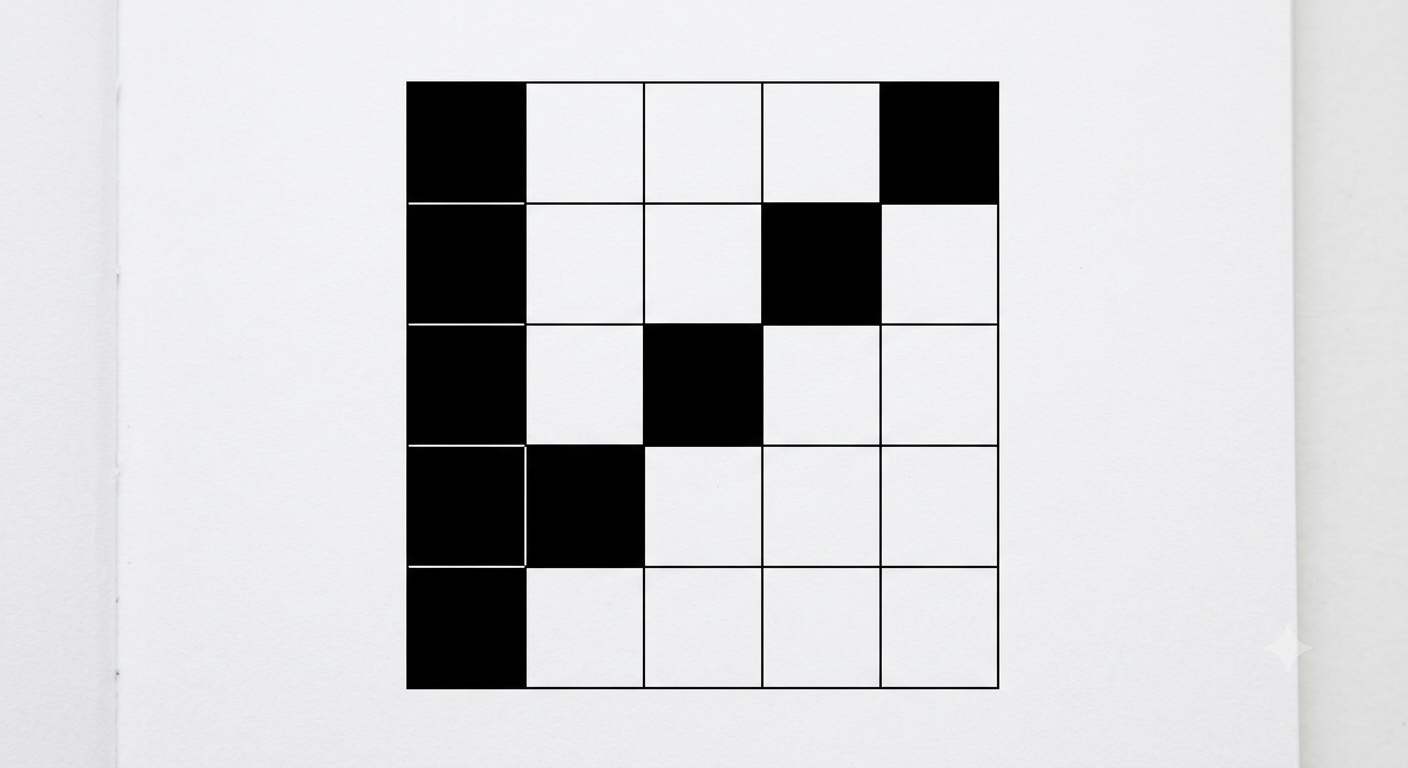

But this language was not designed just for the human hand and tongue, an AI can effortlessly interpret it. By mapping the characters to 5x5 binary grids, an artificial intelligence can read and archive the language quickly, bypassing the complex, error-prone optical character recognition required for natural languages such as English or Mandarin.
Once we had the architecture of shapes and sounds, we needed a way to assign meaning. Instead of inventing words at random, we isolated the set of semantic primes—the most indivisible, foundational concepts of human thought. Working alongside AI, we mapped these core meanings to the 32 phonemes, ensuring every word is built from a logical root.
The result is Vaerysha. It is easy to learn, to speak, to hear, to read, to write, and to archive—for both humans and machines.


We did not build this simply to release another constructed language into the world for hobbyists. We built this because our current tools of communication are fractured. We want a new vector of clarity to arise. A tool that minimizes the arbitrary, where thought transforms effortlessly into language.